Tuesday, October 22, 2013

Wandering

I was hiking in the woods the other day, and the only thing I could think about was wandering. And what it feels like when you're wandering. And I can't really explain it, but I think it makes more sense to me now than it did before. At least, for one sort of wandering.

I think its about being, and existing, and about things just being right. And things don't matter anymore. And visual processing decreases because putting in the effort to process vision is just unnecessary. You just are. It's a sort of zen. Except, its a sort of zen that isn't necessarily safe and that others don't like because there's not control of it.

But its about just now, going and walking, and that being what to do, and you're there, you're with the world, the world is interesting, and society, society is gone for now, you don't have to hear the people, you don't have to deal with all of that, its okay, its a break, its just okay for now.

Whether its actually okay, that's a question, because wandering is dangerous. Going places because they're where to go, without thinking, and without processing, and not knowing where you are after, that can be a problem. Being drawn to water, can be incredibly dangerous. But, ignoring all of that and just going into the mental state, its that, its the getting rid of society, and just being okay for right now and just being okay walking and doing and being.

It's being at a lower level, where doing is doing, instead of being trapped in a mind where you have to analyse and figure out and predict and solve and react to everything and that's just hard and gets exhausting and to be too much. It's an escape, but its not running, its just letting go. It's not thinking, because thinking is what you always do. It's a break from thinking. It's a break from being external because that's what you have to be, and now instead you just are without the thought that needs to rule normal life.

And thoughts wander, and you wander, and you are. And its meditative. And you might not understand that you're not supposed to do things, because that's not what its about. Maybe you walk an extra mile down the wrong path. Maybe you forget that you're not supposed to go to the river on the other side of the highway and down a steep hill. Maybe you can't remember the moves to the dance even while you're dancing it. But, in that state, its saying, none of these things you struggle with so constantly matter, you just are. You just walk. You just are one with the world and on you go.

At least, that's what it feels like to me. I don't know how accurate this is to others. I've found that I can control this in me mostly, where I don't let go unless I'm in a safe place to do so, but if I don't get that, then my functioning is reduced. I didn't realize this until recently though.

Thursday, August 8, 2013

Handflapping

I don't remember flapping as a child.

Of course. I also remember it being easier to communicate, and all signs point to me being one of those unusual people who as they go through adolescence and early adulthood, get more stereotypical autistic.

Either way, I don't remember flapping as a child. I might have handflapped some, but I don't remember doing so. I know that in high school and since then I've had stims, and I'd assume I did before then, but what they were wasn't necessarily hand flapping.

I hand flap now. Mostly when alone, but not only. It varies entirely on what's going on.

But, the more I read about what people have gone through, the more I read, about Quiet Hands, the more I read about people having stims taken away and them ending up self harming, the more I end up hand flapping.

The first time I remember handflapping was after spending time with someone who flapped - it was like I picked it up from her. I started using the stim that she was using. From that, it started generalizing. I started having multiple different types of flaps. I now have an excited one, a hurrying one, a wanting a communicate one, a "this person gets it" one, a "I'm proud to be autistic" one (which comes out after reading well written things by autistic self advocates).

And while I don't remember flapping as a child, its a stim that feels like I can communicate through. Of all my stims, its the best to communicate through.

It makes so much sense that people hand flap.

I'm doing it more and more. And I'm not ashamed.

Because, really. Communication is communication. Curling up in a ball because you can't speak, is communication. Typing, and making your phone speak is communication. Hand flapping excitedly is communication.

Whoever says it all has to be speech is just wrong.

I can flap and people can learn what I'm thinking from that.

Quiet Hands might mean to many that they need to stop.

But to me, it means if they got hurt, then really, there's even more no reason to not be open about who I am as this becomes more and more natural. It makes me want to hand flap. It makes me want to not only show who I am, but use my hands to do so.

Flap away.

Friday, August 2, 2013

The cost of logic

This was discussed the other day with my counselor, and I realized, its probably something that people don't know as much about.

Sometimes, there are specific triggers, that hit my mind, and I lose the ability to process. This makes sense. It breaks my ability to process, because instead there's this other stuff taking over.

But, in particular, the idea of someone acting in a negative mood and telling me they're not, at the same time, breaks me. It takes all of what's going on in my head and crunches it up and says NO. And then I need to get as far away from people as possible.

Because, you see, what this is doing is saying that every bit of the things I've built up for how to understand people are WRONG. People are not trustworthy, and not only that, my brain's understanding of them isn't trustworthy. I can't trust my own sense of what's going on. Everything is wrong, and I can't understand it. I can't be near it until I have managed to sort it out, figure out what's true, and what's false, and piece it back together. Until people are people, and truth is truth, and lies are lies, and my sense of what's going on is trust worthy.

When I'm interacting with people, I'm not doing so intuitively. I'm analyzing it. I'm analyzing it all. So, when my analyzation has been broken, been told its wrong, I don't have intuition to fall back on. And that's what happens. The analyzing requires the ability to trust the analyzing. And when the analyzing has been told its its innately wrong, then how can I trust it? I need to reset it. To tell it, that no. It's correct.

And until that point, people are absolutely terrifying, because I have no sense of what they are doing, or why. Without my analyzing, I don't know what's going on, and without knowing, its scary. So I want to be as far away from people as I can. So I run, and I hide. Because they scare me because I don't know if they'll hurt me. I have no way to get reassurance they won't. Someone who is coming to hurt me, and someone who's coming to reassure me, and someone who's just being neutral are the same at that point. They're all to be avoided, to make sure to avoid the person who'd hurt me, whether they'd hurt me purposefully or by mistake.

And then, I rebuild, and I wait, until something else is too much. And it'll happen, because I can't just take everything. But when I break, its not just being frustrated, its more than that.

Noise

Reading, wanting to communicate, struggling to get ideas out. Okay, I'll sit down and write. I can do this now. It's a way to get ideas out. I can explain how I feel and how I live.

Right, I have stuff to do on this topic. That's a specific thing to do. Explaining about how life is harsh, and you can't just always focus on how you cope, because if you do that then you deny what people deal with.

Writing. Starting to get in the right mode. I can do this. It's starting to work. I've been stuck not managing to do this for months, but its starting to work now.

Type type. type type. type type.

People coming up and trying get me to do other stuff, interrupting all my thoughts. Losing it. Losing it all again. Don't want to lose it.

Please, let me keep the right mindset. Please. Wrapping up. Curling up. Smaller, smaller. Pulling in.

Walking away, realizing they were interrupting me, maybe kept it, back to trying. Writing quick ideas down to remember thoughts.

RING RING

Stupid phone.

SQUAWK

Too much noise.

Talking. So much talking. Squawking. Squawk squawk. Thoughts are running away. They're leaving.

Getting harder to string ideas together. Can communicate well enough to make people think I'm functioning, but mentally I'm lost. Anything I want to do is gone.

All the noises. Too many noises.

Clenching up. Don't want to hear it all.

Feel like I'm going to burst.

Want to just manage to do something effective. Why can't I be effective?

Bark bark bark bark

Even more. Why more?

Holding head. Typing. More headache.

Questions? I'm supposed to answer questions? Right, yes I can do that.

I'm going to just hide now. Maybe the noise will stop eventually.

Rock rock. rock rock

Thursday, June 6, 2013

People Not Listening

When communicating is already hard, people not listening rips at it.

When searching for words to say takes a lot, people not believing the words, or trying to put words in your mouth, makes it even more of a struggle to say anything.

When initiating saying anything takes so much, people not taking it into account says its not worth trying.

When its so hard to get people to listen, it rips at emotional scars. It rips at a lifetime of people pushing for normalcy. It rips at people not being accepting. It rips at being hurt over and over again because of being who you are.

It rips at doing everything you can and being the best you can be, and being told that its not good enough.

They just won't listen.

They just won't listen to you saying "let me get help my way, not yours"; "I have my needs, not yours"; "my body is not the same as your"; "This hurts"; "Help, please" or "Leave me alone, please".

They just won't listen.

Because your words aren't what they expect to hear. They're not given in the way they're expected. They're not the words they expect.

And because they're not what they expect, they aren't taken as seriously. Because expectations matter.

So, sometimes, people who have communication impairments end up being better communicators, because they actually listen. Because they realize that not everyone communicates the same way. Because they have to know that. Because they've lived it too.

They've lived the downsides.

They know that people don't always listen.

But why does it have to hurt so much?

Monday, April 29, 2013

Neurodiversity [and disability]

There was a post on wrongplanet asking about neurodiversity and disability. Are they mutually exclusive? How do they relate?

And really, looking at how people talk about it, it doesn't seem like people understand disability as part of neurodiversity.

So I responded. I responded the following:

Neurodiversity is about saying that disability doesn't mean lesser.

I am disabled. I am not a lesser person because of my disability. I cannot do everything that others can. I will never be able to. I will always have needs that others will not. I will always be disabled and not just different.

But that doesn't mean that I'm not good enough. It doesn't mean that I'm not human. It doesn't mean I'm less than someone who's not disabled. It doesn't mean that I need to be cured.

It means that I'm a disabled person.

And neurodiversity means embracing those differences. All of them. Disabled or not. It means saying that someone who needs to read to learn and someone who need to listen to learn both matter. It means someone who can't see a florescent light without getting a migraine matters. It means that someone who needs to use tools to remember what they're doing day to day matters. It means someone who doesn't know how to interact socially matters. It means that we're all people.

It means that disability isn't being broken. It means that disability isn't being wrong.

But its a concept larger than disability.

It means that being different isn't being wrong. Disabled or not.

That's what it means to me.

I'm disabled. I'm not less than someone who's not. I'm just me.

And people agreed. And people disagreed. People either said that high functioning autistic people weren't disabled, or they liked what I said.

But disability is what it comes down to. And its a scary word. And it doesn't have to be a scary word. An neurodiversity is saying its not a scary word.

I am not capable of the same things others are. I just cannot do things others can. This is not a question. This is just a statement. There are things I cannot do. There are major things I cannot do. The fact that its not a big deal doesn't matter. The fact that there's a lot I can do doesn't matter. The fact that I work around it doesn't matter. There are things I can't do.

That's what disability means - that there are things you are limited in doing or can't do. Not that you can't do anything. Not that you aren't good enough. None of that. I am disabled. I am disabled by the same stuff that calls me autistic. By the stuff that makes me deal with a sensory system most people can't imagine, and by the stuff that makes my nonverbal communication a mess.

But neurodiversity says I'm good despite that. Neurodiversity says I'm not wrong. Neurodiversity says embrace those differences because differences are good, even if it means I'm disabled. Disability isn't wrong . I might not be capable of everything. But I'm capable of enough.

I'm capable of being happy. I'm capable of enjoying life. I'm capable of making a difference. Sure, I need help. Sure I'm not capable of everything that's normal. That doesn't matter. I'm not a lesser human despite that. I don't need "fixed". I don't need pitied.

I need helped. I need accepted. I need treated like another person, and a person who's needs aren't the same as everyone else's. I need acknowledged. I need to be me not someone else.

So yes, I'm disabled. But accept me anyways. I'm not broken. I'm just disabled. And disability doesn't have to be scary.

Tuesday, February 26, 2013

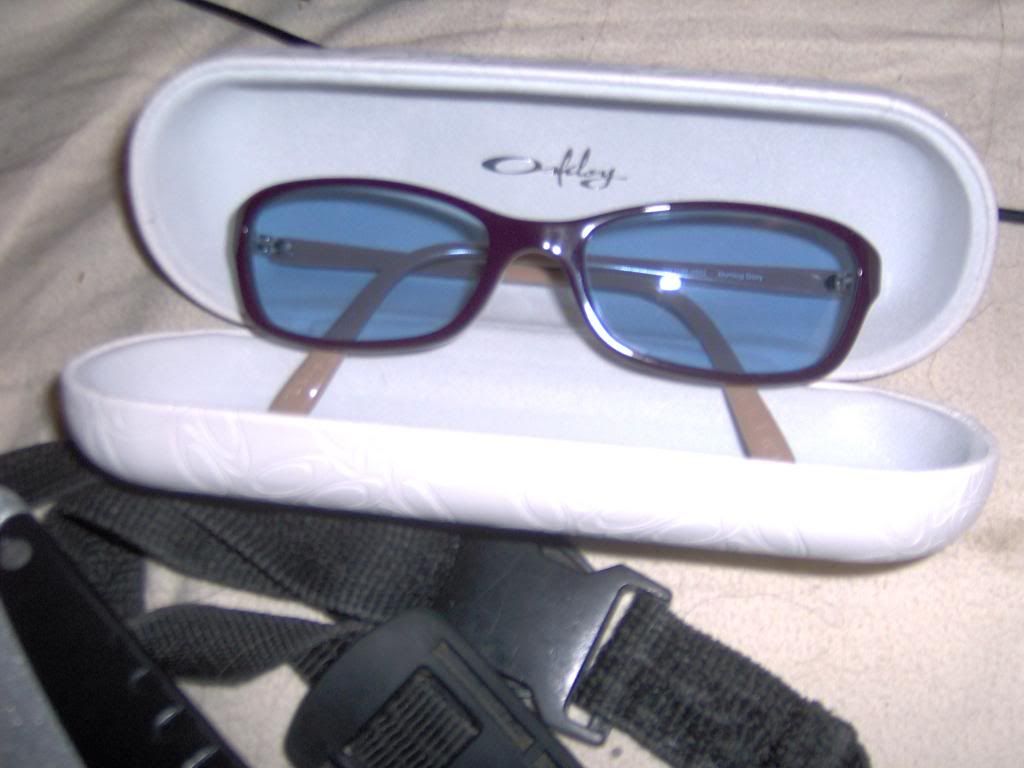
Tinted Lenses and Irlen Syndrome

I've had so many posts I've been wanting to make and have been not managing to get the words down. However, this post is a straightforward one.

At some point last year through some of the Sensory Processing Disorder people I heard of people using tinted lenses. Some of them also mentioned Irlen Syndrome, and we were going through the self-tests and commenting about how many of the criteria on the self-tests we meet. I meet almost all of them for headaches or light sensitivity, and in the long form, more than 3 in some of the other sections as well.

There is an Irlen center somewhat local to me, and I contacted them asking costs for everything over the summer. They gave me costs (which I don't remember the numbers of), and mentioned that November 1st they were going to be training people as Irlen screeners, and that if I wanted to be a person used as an example for them to learn on, then I could be screened for free.

So, November 1st I was screened for Irlen Syndrome. The screening process was quite interesting. I ended up in major overload and not being able to function for multiple days after it because of how much sensory overload I was in because of it though. They were nice and skipped over some sections when they wouldn't give them any information (i.e. We know she reacts poorly to florescent lights if she has such strong self reports and reports that from her occupational therapist so strongly, lets not test it here in order to try to not put her in overload as long as possible). Lots of what they did was purposefully putting visually difficult patterns and having me look at them and trying to cause visual distortions to come up - such as a penguin made up of Xs, or a drawing of a cube split unevenly.

My screening came back as expected saying that yes I did have Irlen Syndrome, so they then went and figured out what overlay color would help me. We went through different overlays and combinations of overlays until we figured out that aqua + aqua + grey was what would help me the most so they sent me home with that combination.

They agreed that tinted lenses would be really helpful to me - that they'd do far more for me than overlay would, so it was then a question of getting to tinted lenses. Going through the Irlen Center would cost money, we could do it cheaper than that...

You can dye polycarbonate (and other plastics) with synthetic fabric dyes. So we bought Blue and black dyes) and set out trying to get frames. Ended up trying to get rimless frames because we could try to do more ourselves with rimless frames, but we kept messing up trying to make lenses.

Last Tuesday we managed to dye a piece of plastic to the color of blue that I wanted my lenses to be dyed to. Later in the week we went to the optometrist, got other frames (thus if you try this route, don't go rimless they can't use rimless with tinted matching always), gave them the match, and told me I'd get my lenses Monday or Tuesday.

Yesterday at 2 pm (after I wrote most of this up actually) I picked them up! They still need adjusted for fit a bit, because I want them to be crooked in a particular manner to make them crooked with my face. It shouldn't be a hard adjustment now that I figured out what I want (I wasn't managing to explain there what I was wanting so we got them to comfortable and visibly level, and considered that good, now I've figured out what I was wanting).

Jonored is looking at possibly making blinders for the side if I have issues with peripheral vision and them, a few different possible materials have been looked at. I really like the idea of removable blinders, but I don't want to add on to his projects if he doesn't have time, so its currently an "if it becomes necessary, and let him think about how he wants to do it" thing. It'll probably happen though.

Anyways, I've definitely noticed they've helped. I'm going to after a while of wearing them go through and figure out in what areas are they helping. So far I know they're helping with florescent lights at least to some degree in particular and overall helping.

Wednesday, January 9, 2013

Communication difficulties

It's getting harder to communicate. I don't know how much is my meds, how much is stress, but its getting harder to communicate.

It's harder to find words that I'm looking for. I end up rambling trying to find what I'm trying to say. My sentences are ending up long winded and harder to follow.

Jonored is finding it hard to understand my speech patterns now, because of the stop and go patterns, combined with the sentences getting longer. Sometimes they get too long to keep a single sentence in his head at once, unless I stop and plan the entire thing out before I start speaking.

At the same time as this, a lot more frequently, its just feeling not quite natural to speak, and at times to communicate by words at all. If I actually think about it in these states its not even hard, it just, doesn't feel right.

The part that's actually getting to me, is the fact that its getting harder to write too. I will go and have ideas and I'll want to put them down, and I can't get them out of my head. They feel trapped, making me feel trapped.

I think its a combination of both. I'm trying to figure out ways to compensate. The topamax is helping with my headaches, but when we went from 100 mg to 150 mg a day the side effects jumped drastically. At the same time, my stress level, and the amount of stress I'm around is possibly making that worse. I don't know. Jonored and I are talking about me asking about reducing my med dosage back to 100 mg when I see my neurologist again, because this is getting really hard on both of us. Maybe as I'm on this dosage longer it'll get easier? It's been a while though.

Monday, December 10, 2012

Autistic

December 1st the committee agreed on the final version of the DSM-5; in May 2013, the DSM-5 will be published.

One of the most talked about changes from the DSM-IV to the DSM-5 has been in autism - they're changing it so that instead of having the separate diagnoses of classic autism, and Asperger's and PDD-NOS, they just have the diagnosis of Autism Spectrum Disorder, with severity levels. People have been felt very strongly about this, argued about it a lot, and now, as of December 1st, its finalized, the diagnosis in the DSM-5 will in fact be Autism Spectrum Disorder.

I've been incredibly supportive of this change, and have been using the word autistic, specifying my diagnosis is Asperger's for a while. Now, we're all just autistic. This is better for the stigma for everyone on the spectrum to me - people are more individuals now. Yes, there are subtypes. But the subtypes aren't "Asperger's" vs "Classic Autism" - that split isn't a very meaningful one, and they are talking about taking into account details of individuals for people's diagnoses.

Will everything be the best it can be? No, but it should be better than it was.

I started using the word "autistic" to refer to myself instead of "aspie" for a few reasons including:

  • Inclusion of the entire spectrum, caring about what everyone on the spectrum wants, and general disability rights
  • Relating to what people elsewhere on the spectrum describe - including nonverbal people
  • Having issues with stereotypes of Asperger's; I am neither active-but-odd, nor NVLD, and people treat me as such, using "autistic but speaking on time" actually has people treat me better than "Asperger's

For me, the DSM-5 is a better description. I'm clearly a case of Asperger's, but I'm also passive, not active-but-odd. As it is, we'll have to see what actually happens. It's been too talked to really know what it is at at the moment. Likely, not much will change.

Tuesday, September 11, 2012

Everyone grows up faster than me

I've felt like this before, like people grow up, and like I don't, and I get left behind. I don't know how to adjust to adult life. When I was younger, I was known for being particularly mature, now, as a young adult, I feel trapped between being a child and an adult, where other people my age are making this transition, and I'm stuck behind, unable to follow.

I don't know how to take care of myself. I don't know how to do things that others find simple. As I've been getting older, my challenges have been becoming more apparent, because being in school was easy for me, but this isn't. And watching around me, other people aren't having this. They went through, they had discomfort as a teenager, they are still not entirely settled as young adults, but they are settling into adult life, getting jobs, and taking care of themselves. They're growing up.

I'm not. I'm stuck here. And I'm left behind.

I've felt left behind here at a few points in the past - I didn't grow up the same as other already. I really miss my friends from high school. They grew up before me. They grew up when they went to college in ways I didn't, and when they made new friends, I only found jonored, and when they started jobs, I hadn't, and they're ahead of me in life.

And now jonored's interviewing, and I'm terrified. He knows this about me, he knows about my impairments, we've been working on me being less dependent on him, but I'm scared, because he's growing up in ways that I'm not too, just like everyone else has. I have to trust him to not leave me behind. I trust him, I trust him to pull me along, going to work and coming home to me, having us work on my ability to work at the pace I can manage (which is currently volunteering one day a week at a school that I want to write about - I'm volunteering at a school for children on the autistic spectrum).

I don't know what to do here as everyone else around me grows up to an adult life and I'm only dragged along behind because I'm not capable of doing everything they are.